If you’ve ever browsed WordPress themes or plugins, chances are you’ve seen the term GPL pop up more than once. Some developers proudly promote their products as “100% GPL WordPress themes and plugins,” while other websites sell huge bundles of GPL tools at surprisingly low prices.
Naturally, that raises a few questions.
What exactly is GPL? Why does WordPress rely on it? And how does it affect the themes and plugins you use on your website?
For beginners, the idea can feel a little confusing at first. Some people think GPL simply means “free software.” Others assume it means there are absolutely no rules. In reality, the truth sits somewhere in between.
Once you understand how the GPL license works, a lot of things about WordPress suddenly make sense. It explains why WordPress is free, why thousands of plugins exist, and why developers can build businesses around it.
Learning about GPL also helps you:
- Use WordPress legally and confidently
- Understand your rights as a user or developer
- Avoid shady websites selling risky plugins
- Build and distribute your own WordPress products the right way
So let’s break it down in simple terms and see why GPL is such an important part of the WordPress ecosystem.
- 1 What is GPL in WordPress?
- 2 Why GPL is Important in WordPress
- 3 GPL License Meaning in WordPress
- 4 GPL WordPress Themes and Plugins Explained
- 5 Key Benefits of GPL in WordPress
- 6 Best GPL WordPress Tools and Plugins
- 7 Step-by-Step Guide: Using GPL WordPress Themes and Plugins
- 8 Tips for Beginners Using GPL WordPress Products
- 9 Common Mistakes to Avoid
- 10 Conclusion
- 11 FAQs
What is GPL in WordPress?
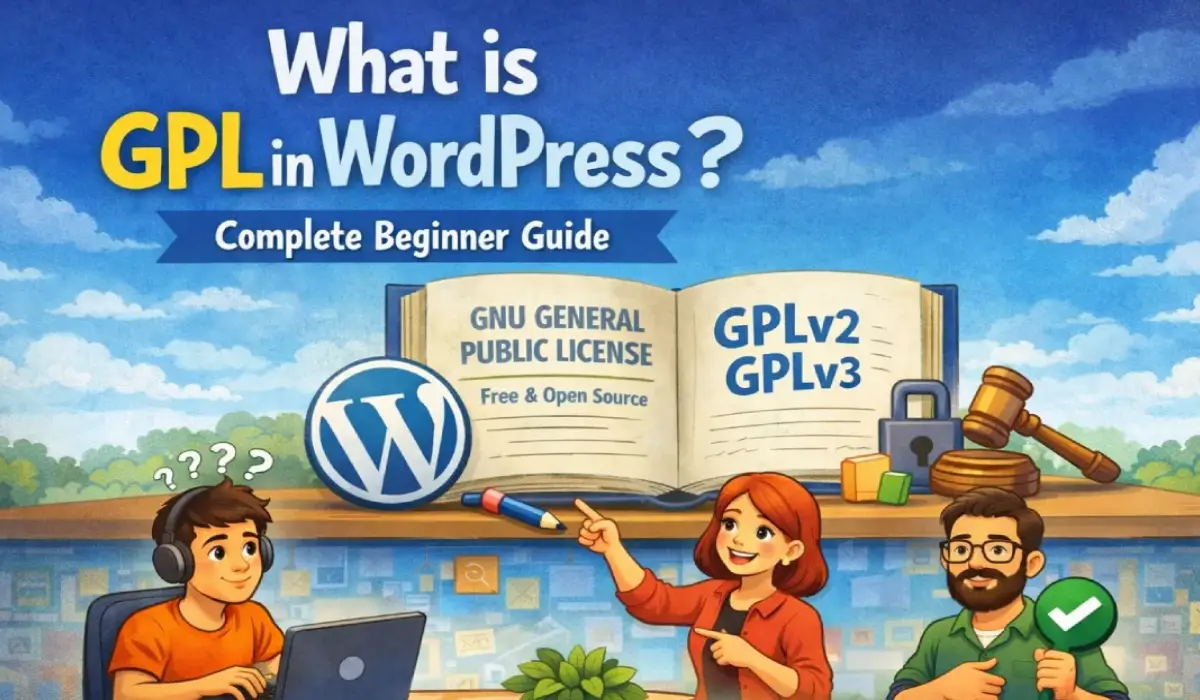
GPL stands for “General Public License.” It is an open-source software license that allows users to use, modify, and distribute software freely.
WordPress itself is released under the GPL license, which means anyone can:
- Use WordPress for free
- Modify the code
- Share it with others
- Build products based on it
Because WordPress uses the GPL license, all WordPress themes and plugins that interact with WordPress are also expected to follow GPL principles.
Simple Definition
GPL in WordPress means that the software is open-source and can be used, modified, and redistributed freely.
This is one of the main reasons WordPress became the world’s most popular website platform.
Why GPL is Important in WordPress
The GPL license is the foundation of WordPress’s open ecosystem. Without it, the platform would not have grown into the massive community it is today.
Here are a few reasons why it matters.
1. Freedom for Users
GPL ensures that users are never locked into a single provider.
You can:
- Modify themes or plugins
- Hire developers to customize them
- Move your website to any host
This gives website owners complete control.
2. Massive Plugin and Theme Ecosystem
Because developers can build freely on top of WordPress, the ecosystem has grown rapidly.
Today there are:
- 60,000+ free plugins
- 10,000+ themes
- Thousands of premium tools
Examples include:
- Page builders like Elementor
- SEO plugins like Yoast SEO
- E-commerce tools like WooCommerce
All of these exist because the GPL encourages innovation.
3. Community Collaboration
Open-source projects grow through collaboration.
Developers worldwide contribute improvements to WordPress, making it:
- More secure
- Faster
- Feature-rich
This is why WordPress powers over 40% of all websites globally.
GPL License Meaning in WordPress
To fully understand GPL in WordPress, it helps to know what rights the license gives users.
The GPL license provides four core freedoms.
1. Freedom to Use
You can use WordPress or any GPL software for any purpose, including commercial projects.
Example:
- You can build client websites
- You can run an online store
- You can create a SaaS business
2. Freedom to Study the Code
Since WordPress is open-source, developers can view and analyze the code.
This helps developers:
- Learn coding techniques
- Improve software
- Fix bugs
3. Freedom to Modify
You can customize WordPress themes or plugins however you want.
For example:
- Change theme design
- Modify plugin functionality
- Build custom features
4. Freedom to Share
GPL allows redistribution.
You can:
- Share themes with others
- Sell modified plugins
- Create new products based on WordPress
However, the redistributed version must also remain GPL licensed.
GPL WordPress Themes and Plugins Explained
Because WordPress is GPL, most WordPress themes and plugins follow the same license.
This is why you often see the phrase:
“100% GPL WordPress themes and plugins.”
What This Means
If a theme or plugin is GPL licensed, you can:
- Install it on unlimited websites
- Modify its code
- Share it with others
But there is an important detail many beginners misunderstand.
You Are Paying for Service, Not Software
When you buy a premium theme or plugin, you are usually paying for:
- Updates
- Support
- Documentation
- Customer service
The software itself is still GPL.
This is why some websites sell GPL theme bundles at cheaper prices. However, those versions usually do not include official updates or support.
Key Benefits of GPL in WordPress
The GPL license offers several advantages for users, developers, and businesses.
1. No Vendor Lock-In
You are not tied to one developer or company.
If a plugin company shuts down, you can still:
- Use the plugin
- Modify it
- Hire someone to maintain it
2. Unlimited Website Usage
Many GPL themes allow installation on unlimited websites.
This is great for:
- Freelancers
- Web design agencies
- Developers managing multiple clients
3. Better Security
Open-source software often becomes more secure over time.
Why?
Because thousands of developers review the code and fix vulnerabilities quickly.
4. Faster Innovation
GPL encourages developers to build on each other’s work.
This results in:
- Better plugins
- More integrations
- Rapid feature development
Best GPL WordPress Tools and Plugins
Many popular WordPress tools are fully GPL licensed.
Here are some well-known examples.
1. Elementor
A powerful drag-and-drop page builder used to design websites visually.
Features include:
- Visual website design
- Landing page builder
- Theme customization
2. WooCommerce
The most popular e-commerce plugin for WordPress.
It allows you to create:
- Online stores
- Product catalogs
- Subscription services
3. Yoast SEO
One of the most widely used SEO plugins.
It helps with:
- On-page SEO optimization
- XML sitemaps
- Readability improvements
4. Astra Theme
A lightweight, highly customizable WordPress theme perfect for beginners.
Benefits include:
- Fast performance
- Elementor compatibility
- Ready-made templates
Step-by-Step Guide: Using GPL WordPress Themes and Plugins
If you are new to WordPress, here’s how you typically install GPL themes and plugins.
Step 1: Choose a Trusted Source
Download themes or plugins from:
- WordPress.org
- Official developer websites
- Trusted marketplaces
Avoid suspicious sites offering nulled plugins.
Step 2: Download the Theme or Plugin
You will receive a ZIP file.
Do not extract it.
Step 3: Upload in WordPress
Go to your WordPress dashboard:
Plugins → Add New → Upload Plugin
or
Appearance → Themes → Add New → Upload Theme
Step 4: Install and Activate
Click:
- Install
- Activate
Your theme or plugin is now ready to use.
Tips for Beginners Using GPL WordPress Products
If you are new to WordPress, follow these best practices.
1. Always Buy From Official Sources
Purchasing from official developers ensures:
- Regular updates
- Security patches
- Reliable support
2. Avoid Nulled Plugins
“Nulled” plugins are illegally modified versions of premium plugins.
They often contain:
- Malware
- Hidden scripts
- Security risks
3. Keep Everything Updated
Updates often include:
- Security fixes
- Performance improvements
- New features
Always update:
- WordPress core
- Themes
- Plugins
4. Use GPL Responsibly
Just because you can redistribute software doesn’t mean you should abuse it.
Respect developers who spend time building high-quality tools.
Supporting them helps the ecosystem grow.
Common Mistakes to Avoid
Many beginners misunderstand GPL. Here are common mistakes.
1. Thinking GPL Means “Everything Is Free”
GPL allows freedom to use and share software, but developers can still charge for:
- Support
- Updates
- Services
2. Downloading From Untrusted Sites
Cheap GPL marketplaces sometimes distribute outdated or infected software.
Always verify the source.
3. Ignoring Licensing Terms
Even with GPL freedom, redistributed products must remain GPL licensed.
You cannot change the license to something restrictive.
4. Not Supporting Developers
Many developers rely on sales to maintain their products.
Buying legitimate licenses helps keep tools updated and secure.
Conclusion
Understanding what GPL in WordPress means is essential for anyone working with the platform.
The GPL license is the reason WordPress became such a powerful and flexible ecosystem. It allows developers to innovate, users to customize their websites, and businesses to build scalable solutions.
In simple terms:
- GPL gives you freedom
- It encourages collaboration
- It powers the massive WordPress ecosystem
For beginners, the best approach is simple:
Use trusted themes and plugins, keep your site updated, and support the developers who build the tools you rely on.
Once you understand how the WordPress GPL license works, you’ll be able to use WordPress with confidence and build better websites.
FAQs
1. What is GPL in WordPress?
GPL (General Public License) is an open-source license that allows users to use, modify, and distribute WordPress software freely.
2. Are all WordPress themes and plugins GPL?
Most WordPress themes and plugins follow GPL because they are built on WordPress, which is licensed under GPL.
3. Is it legal to use GPL WordPress themes?
Yes, it is completely legal to use GPL WordPress themes and plugins as long as they follow the GPL license.
4. Why do premium GPL plugins cost money?
You are usually paying for support, updates, and developer services, not just the software itself.
5. What is the difference between GPL and nulled plugins?
GPL plugins are legal open-source software, while nulled plugins are illegally modified versions that often contain malware or security risks.